

Why Playground Grass?
Written by Sonya Wilson
What should playground planners know about artificial playground grass, and is it the right fit for your project?
Choosing the right surfacing for your playground is one of the important decisions in the playground planning process. Surfacing plays a huge role in safety, accessibility, aesthetics, maintenance, and cost.
Before diving into materials, it’s worth stepping back and asking a more fundamental question:
What’s the “why” behind your playground project?
Who is this playground for? Are you building a destination playground, a small community park, or a play space for your daycare? Understanding your users, the purpose of your space, and your long-term goals will help you choose surfacing that supports both your vision and your budget.
Artificial turf is one surfacing option that continues to grow in popularity because it offers safety, visual appeal, and durability. But like any product, it comes with pros and cons.
What are the benefits of playground grass?
There are great benefits to using artificial playground grass as surfacing for your project. Here are a few:
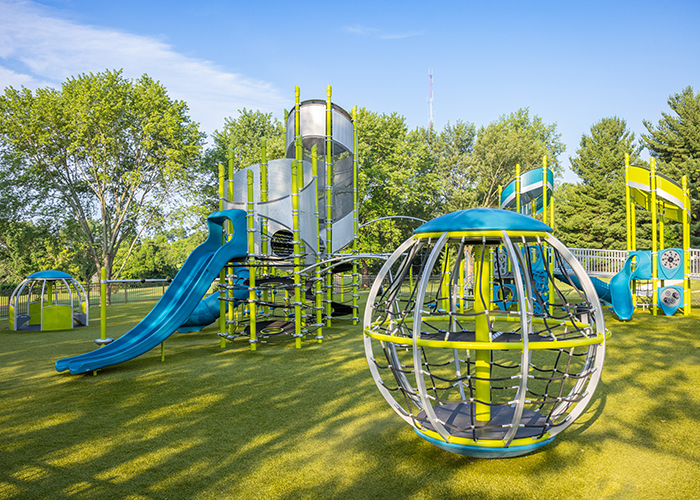
- Safe & Shock-Absorbing: When installed with the proper base layer, turf systems meet CSA and ASTM standards for fall protection. They provide consistent impact attenuation beneath play equipment and around high-use zones.
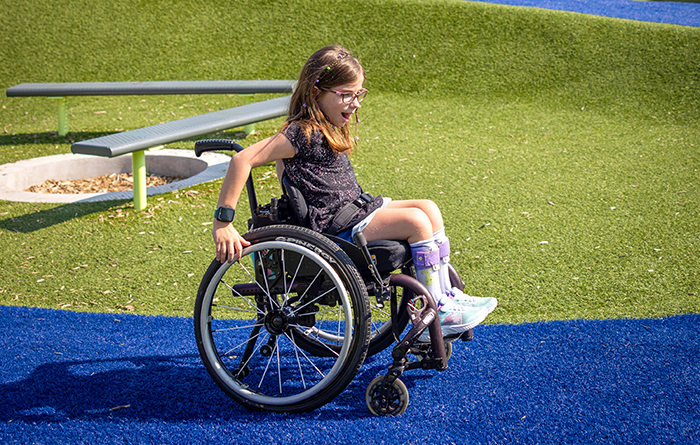
- Accessible for All: Artificial turf is firm, stable, and slip-resistant, making it an ideal choice for individuals using mobility devices or caregivers pushing strollers or wheelchairs.
- Always Green & Clean: Turf gives you the look of grass without the mud, patchiness, or mowing. It’s a great option in high-use areas or for paths through the play space.
- Low Maintenance: Artificial turf only needs some occasional brushing and cleaning to make it last on a playground.
- Texture: Artificial playground turf is great for adding sensory stimulation to a play space.
Are there any drawbacks to using playground grass?
Playground grass requires some specific considerations when used in a playspace. Some aspects for thought are:
-
Higher Upfront Cost: Artificial turf systems tend to have a higher installation cost than engineered wood fibre. Over time, that may be offset by lower maintenance, but the initial investment can be significant.
-
Heat Retention: In sunny climates or exposed sites, turf can retain heat (typically not as much as rubber). Consider installing shade structures to help mitigate this and using turf in select areas of the play space.
-
Static Buildup: Artificial turf can build up static electricity, which may discharge cochlear implants or interfere with medical devices like continuous glucose monitors that connect to phone apps to track blood sugar levels in children with diabetes.
-
Environmental Considerations: Artificial turf is a synthetic product. While it saves water and reduces the need for chemicals, some projects prioritize natural or recycled materials. It all depends on your priorities and policies.
One Size Doesn’t Fit All
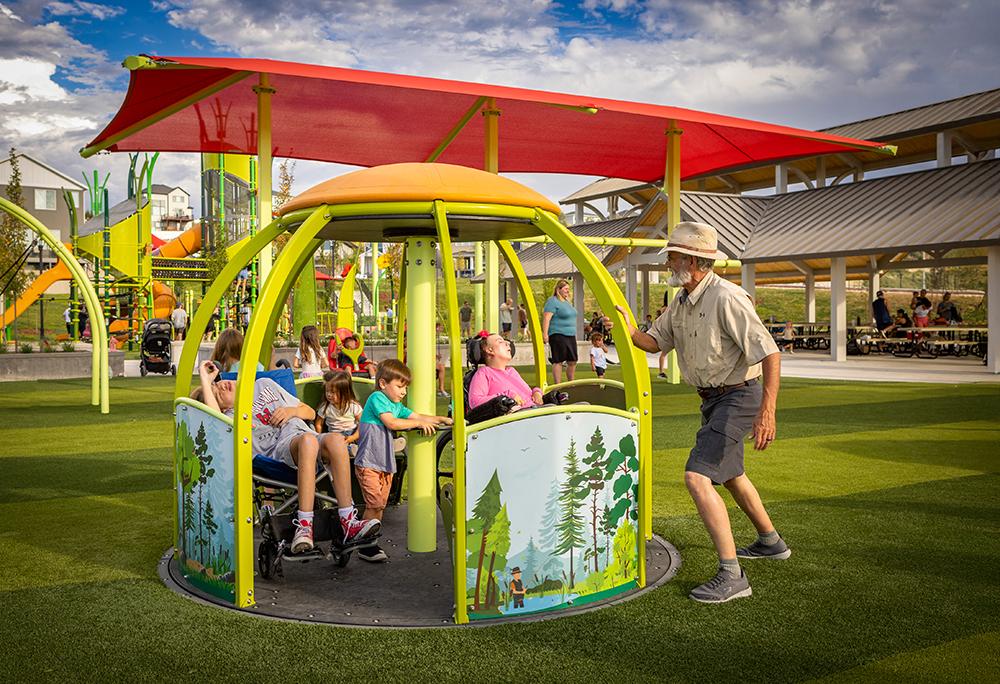
A successful playground integrates different surfacing types to offer an accessible, sensory mix. Poured in place rubber can be used for paths and exit areas around slides. Artificial turf is effective on mounds with hill play and engineered wood fibre can be installed in select areas in the space.
Every playground is different. The best surfacing choice is the one that fits your design goals, your users’ needs, and your budget.
Need Help Deciding?
We’ve worked with municipalities, schools, and developers on hundreds of different playground projects. If you’re weighing your options, or just want to learn more about how turf compares to other systems, we’re happy to help. Let’s talk about your project and find the best solution together.
Contact Us